


Project Details
- Category Medical Data Analysis and Deep Learning in Digital Oncology
- Date June 21, 2026
- rating

Breast Cancer Detection
Breast cancer is one of the most common types of cancer, and accurate early diagnosis is critical for determining the appropriate treatment plan. This project develops a powerful AI model based on clinical data analysis rather than medical imaging.
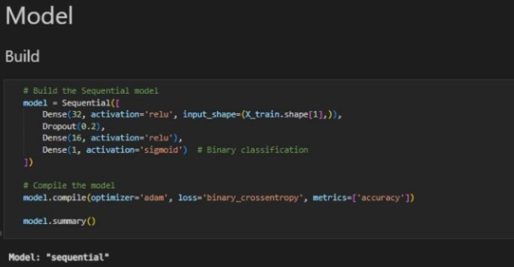
The model is trained on the Wisconsin Breast Cancer Dataset, which contains hundreds of clinical cases. It analyzes complex relationships between multiple measurable features such as tumor size, cell shape, and mass thickness to classify tumors as either Benign or Malignant.
Data Source & Features
The Wisconsin dataset includes features such as radius, texture, perimeter, and other measurements derived from cell images.
- Data cleaning and preprocessing are performed, including handling missing values and feature scaling before training.
Models Used
A variety of models can be applied, including:
- Multi-Layer Perceptron (MLP) Neural Networks
- Random Forest
- Support Vector Machine (SVM)
- Convolutional Neural Networks (CNN) when using image-based data
Performance comparison is done using techniques such as cross-validation.
Evaluation & Results
The model is evaluated using:
- ROC Curve and AUC Score
- Confusion Matrix
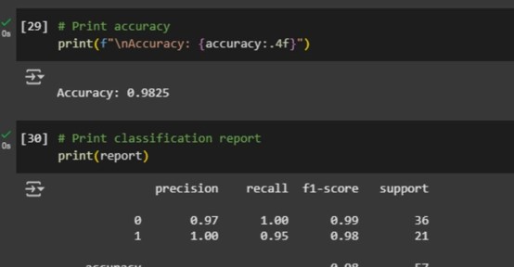
- Accuracy, Recall, Precision, and F1-score
Feature importance analysis is also used to highlight the most influential variables in diagnosis.
Future Improvements
- Integration of mammography image data using CNNs for improved early detection.
- Development of explainable AI models to help doctors understand predictions.
Project Workflow
- Data exploration and understanding feature distributions
- Data preprocessing (cleaning, missing values, normalization)
- Model training and optimization
- Model evaluation using multiple performance metrics
Project Results
- The best-performing model achieves up to 98% accuracy (subject to real dataset results).
- Feature importance analysis identifies the most critical factors influencing diagnosis.
Project Benefits & Features
This project provides an accurate and easy-to-use prediction tool for breast cancer diagnosis, reducing unnecessary medical procedures and accelerating treatment decisions.
- High accuracy in predicting breast cancer (Benign/Malignant).
- Uses reliable clinical data for precise predictions.
- Multi-feature analysis for deeper medical insights.
- Instant and comprehensive classification results.
- Easy integration into hospital and medical systems.
- Based on the trusted Wisconsin Breast Cancer Dataset.
Overview & Challenge
The model acts as an early warning system in the diagnostic workflow. It analyzes complex relationships between clinical features to detect patterns associated with malignant tumors.
The innovation of this project lies in its ability to deliver accurate predictions using structured clinical data, reducing unnecessary medical tests and improving healthcare efficiency. It transforms medical data into measurable AI-driven insights that support better patient care and decision-making.